Implementing the right sales pipeline strategy is an essential element of business development for any company. Without a proper process in place to build sales, prospects and leads see this will go cold, valuable insights will be missed, conversions will be limited, and your business will lose out on revenue.
But what is a pipeline in business development terms, and how do you create and manage one that will be effective for your organization? In this guide, we’ll cover everything you need to know, including the various sales pipeline stages, how to build and maintain an effective strategy, and which metrics to watch.
What is a sales pipeline?
A sales pipeline is a visual representation of your sales process, providing a bird’s eye view of every stage a prospect moves through—from initial discovery to becoming a loyal customer. An effective pipeline drives conversions while simultaneously ensuring no opportunities are missed, because at every stage you can incorporate accountability for action that pushes prospects on to the next phase.
The exact sales process will vary from company to company. When it comes to building a pipeline, business models and unique needs will dictate the process. However, the primary goals remain constant across all industries and organizations when it comes to designing an effective pipeline:
Business health can be determined at a glance.
Revenue is more consistent and predictable.
Sales pipelines are usually visualized as a horizontal chart broken down into various stages, providing total visibility, control and the opportunity to analyze the entire process. However, it’s important to incorporate some flexibility, because not every customer follows the same journey. Some will move through your business pipeline quicker than others, depending on their level of interest and how much knowledge they already have about your products and services.
Nailing down your sales processes and pipeline marketing strategy early on provides multiple benefits:
You’ll know the total number of deals on the table at any given time and their potential value.
You’ll have a clear overview of where prospects sit and which deals to focus on, so it’s easier to allocate time and resources.
Effective tracking makes snags or bottlenecks in your pipeline easy to identify and fix.
By attributing accountability within your sales team, you can ensure leads don’t drop out of the pipeline or go cold through lack of contact.
Your pipeline provides an accurate estimation of how many sales your reps have the potential to close, making overall revenue predictions more straightforward.
Sales pipeline vs. sales funnel
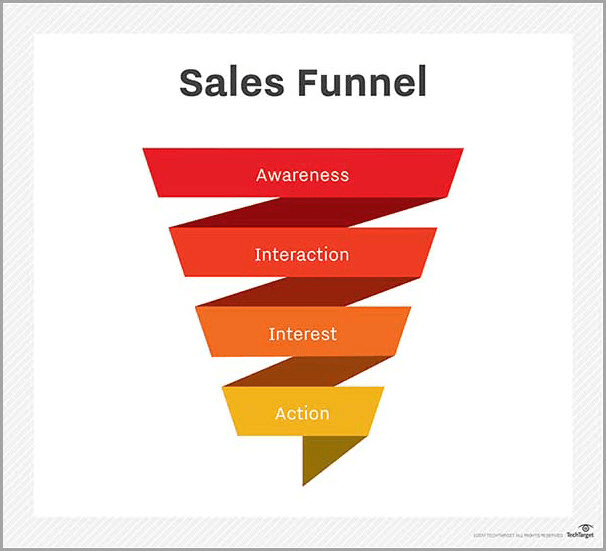
You might think a sales pipeline sounds pretty similar to a sales funnel, but there is a key difference. Your pipeline is seller-oriented and focuses on actions taken by your teams during the sales process, whereas a sales funnel measures your conversion rate as a whole. That’s why it’s described and represented as a funnel; widest at the top where there is the largest number of prospects, and narrower at the bottom as leads become disqualified or decide not to buy.
A sales pipeline report can determine the value and quantity of all prospective deals on the table at any point in time. In contrast, all a sales funnel report will tell you is what percentage of leads from a particular cohort progressed through each stage of the pipeline.
 Site Title